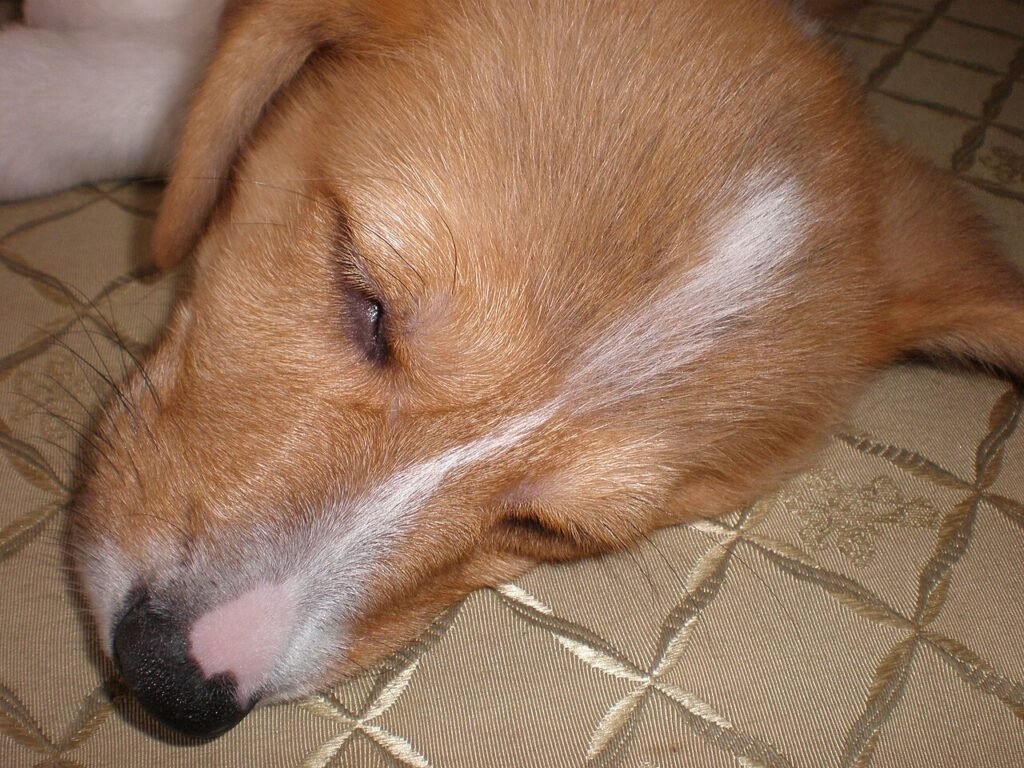
Why an Eight-Week-Old Puppy Has No Timetable
An eight-week-old puppy’s day is not divided into hours. It is divided into sleeps. Each time they wake, a new cycle starts, and that cycle looks roughly the same whether it begins early or late.
This is why a schedule copied from another article rarely fits. One household wakes before sunrise, another closer to midday. One puppy naps briefly, another sleeps much longer. None of that is wrong.
A puppy pushed onto someone else’s clock, woken up because a chart says it is time, or kept awake because the chart says playtime is not over yet, ends up overtired rather than settled. Overtired puppies often find it harder to calm down. They tend to get more frantic, not less.
What actually helps is knowing the order things happen in, and the cues that tell you when to move to the next step. That is what the rest of this page covers.
The Cycle, Step by Step
The cycle has the same shape every time, no matter what time it starts. Learn the order and the cues, and you can run it whenever your puppy wakes up.
Wake, Outside, Eat, Play, Sleep
A puppy wakes up, and the very first thing they need is a trip outside. At eight weeks, they cannot hold anything for long, and the moment they open their eyes is one of the moments they are most likely to need to go. Waking is the trigger, not any particular hour.
After that comes a meal, at a point in the cycle rather than a point on a clock. How many meals a day and how much to feed is a question for your vet and your breeder, since it depends on the puppy, their weight, and their food. This site can point you toward choosing a food, but not toward amounts.
Eating tends to trigger another need to go outside fairly soon after, so build in a second trip once the meal is done rather than waiting. After that comes a short window of play or exploring, and then sleep, usually suddenly and without much warning.
The order — wake, outside, eat, outside again, play, sleep — repeats all day. What changes is how long each part lasts, and that varies by puppy.
Reading the Signs That the Cycle Is Turning
The skill here is watching your puppy instead of the clock. Two things to watch for are the switch from awake to overtired, and the switch from playing to needing to go out.
An overtired puppy does not usually go quiet and settle. More often they get louder, mouth harder, and seem unable to stop even when they are clearly running out of steam. That is a cue to move toward the sleep part of the cycle, not to push through with more play.
Needing to go outside has its own signs: sniffing the floor with more purpose, circling, or suddenly losing interest in whatever they were doing a moment ago. These signs show up faster than you would expect at this age, and accidents happen even when you catch them, which is expected and not a sign you are doing anything wrong.
Reacting to the signal, rather than to a number on a page, is what actually keeps the day moving smoothly.
What Actually Fills an Eight-Week-Old’s Day
Most of an eight-week-old’s day is sleep, taken in short bursts rather than one long stretch. The parts in between are brief, and each one has a job.
A day built this way can look empty from the outside, since so much of it is your puppy asleep somewhere nearby. That is not a sign that nothing is happening. Sleep at this age is doing real work, and the waking stretches around it are short on purpose rather than by accident.
Because the waking windows are brief, it helps to think of the day as a series of small errands rather than one long stretch of activity. A trip outside, a short meal, a little play, and back to sleep — each piece finishes quickly, and none of them is meant to fill much of the day on its own. Expecting long stretches of alert, active puppy is usually where the frustration starts, since that is not what this age actually offers.
Here is what fills the waking part of the day:
- Outside trips — frequent visits outside, triggered by waking, eating, and finishing play, aimed at building the habit of going in the right place.
- Short meals — brief eating windows at consistent points in the cycle, with the amount and count decided by your vet, not by this page.
- Brief play or exploring — a few minutes of low-key activity or a chew, enough to burn a little energy without tipping into overtired.
- Sleep — the largest share of the day, taken in bursts that end on their own rather than to a schedule.
Together these four make up the repeating cycle, in that rough order, over and over. None of the four needs to be extended or rushed to make the day feel more productive. The cycle is complete as it is, and repeating it calmly is the whole task.
When the Day Does Not Look Like This
Plenty of ordinary variation exists inside this cycle. A puppy who sleeps less than a littermate, a household juggling school runs or shift work, or a day where naps run short are all still within normal range.
Some days will simply not follow the order cleanly, and that is worth expecting rather than worrying over. A visitor at the door, a change in weather, or a busier house than usual can shift how a particular day unfolds. The cycle usually reasserts itself once things quiet down again, and a single disrupted day rarely means anything beyond that day.
What is worth a call is a sudden change from your puppy’s own pattern — not a difference from a chart, but a difference from how they were yesterday. Your vet is the person who can tell you whether a change is something to watch or something to act on, and this site is not able to make that call for you.
It also helps to remember that this page describes a shape, not a rule your puppy has to follow exactly. Puppies vary in how much they sleep, how they signal needing to go out, and how quickly they tire during play. Watching your own puppy over a few days will tell you more about their particular version of this cycle than any general description can.
Ask your vet. This page describes a typical day, not medical advice. Any change that worries you is worth a call to your vet, who knows your puppy.
A Day at Eight Weeks, in Order
The table below shows the order of the cycle, not a set of times.
| Step in the cycle | What happens |
|---|---|
| Waking up | Your puppy stirs from sleep, often suddenly, and this is the moment they most need to go outside. |
| Going outside | A trip out right after waking, aimed at building the habit, with another trip likely soon after eating. |
| Eating | A short meal at this point in the cycle, with amount and frequency set by your vet rather than a fixed count. |
| Awake time | A brief stretch of play or exploring that ends once your puppy shows signs of tiring or losing interest. |
| Settling back to sleep | Sleep usually arrives quickly once awake time ends, and the whole cycle begins again on waking. |
Frequently Asked Questions
How many hours should an 8-week-old puppy sleep?
There is no set number to aim for, since puppies this age sleep for most of the day in short bursts rather than on any fixed schedule. What matters more than the total is that sleep and wake periods keep alternating throughout the day without long stretches of forced wakefulness.
How often should I take my puppy outside?
Very often, and the trigger is what your puppy just finished doing rather than the clock. Waking up, finishing a meal, and finishing a play session are all moments that call for a trip outside.
Is it normal for my puppy to have accidents even if I take them out a lot?
Yes, accidents are expected at this age even with frequent trips outside. An eight-week-old puppy’s ability to hold it is limited, and building the habit takes time regardless of how attentive you are.
Why does my puppy seem to go from calm to frantic so fast?
That sudden shift is often the sign of tipping into overtired rather than a sign of misbehavior. Watching for that shift and moving toward a calm settling routine tends to work better than trying to play through it.
Should I wake my puppy up to keep them on a routine?
No, waking a puppy up is not something this page recommends, since the cycle is meant to start from when they naturally wake. Interrupting sleep tends to work against the goal of a settled day rather than helping it.
What should I have ready before my puppy’s first day home?
Having the basics on hand before your puppy arrives makes the first cycle much easier to manage. A guide to what those basics are is available in this list of first-30-days essentials, and a broader look at settling in is covered in the first 30 days guide.