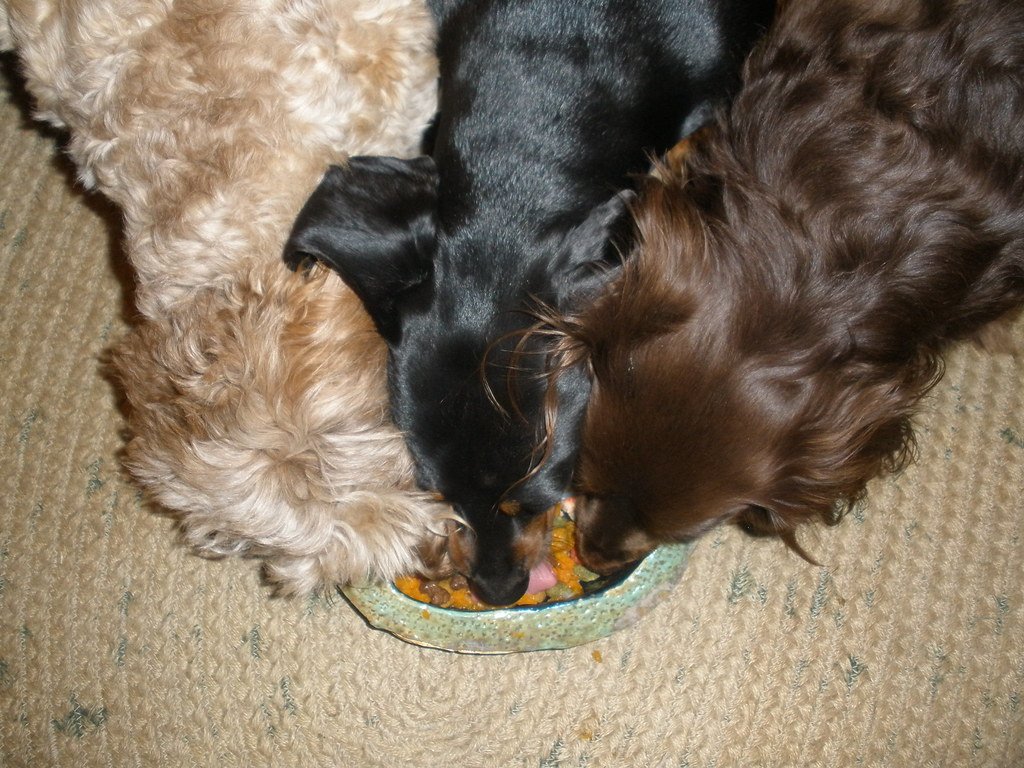
Why the Switch Is a Growth Question, Not a Birthday
The switch from puppy food to adult food is keyed to a dog reaching maturity, not to a date on a calendar. Maturity does not arrive on the same day for every dog, even within the same breed.
Expected adult size changes when maturity arrives, and that timing differs from dog to dog. Two dogs born the same week can reach this point at different times, which means a single age can never describe both of them accurately.
A single month or birthday cannot describe every dog accurately, so no article can name the right time for every dog. This one will not do that, because a guessed date is more likely to be wrong for your dog than right.
If you are only asking this question now, that is not a sign you have missed something or let it go too long. There is no fixed window to have missed, and arriving at this question whenever your dog prompts it is exactly how this is meant to work.
What Actually Changes When You Switch
Two things change when a dog moves from puppy food to adult food: what the food itself is formulated for, and who is deciding whether that change fits your dog.
What the Two Foods Are For
Puppy food and adult food are formulated for different life stages, and that difference is written on the label rather than something you have to work out yourself. In the United States, pet food labels carry a nutritional adequacy statement, worded to a form set by AAFCO.
This statement names the life stage a food is formulated for: growth, maintenance, or all life stages. It is the one concrete detail on the bag that tells you something specific about what you are feeding.
A food labeled for growth is a different situation from one labeled for all life stages, since the second is formulated to cover both. What that difference means for your particular dog, and whether it changes anything about your feeding plan, is a question worth bringing to your vet rather than settling on your own.
Reading the label is a useful first step, but it is a starting point for a conversation, not an answer on its own. Choosing which food to buy in the first place is covered separately in our guide to choosing a puppy food, so this article sticks only to the question of when to move on from it.
Who Decides, and What They Look At
Your vet is the one who names the moment for your dog, and they do it at a check-up rather than by consulting a chart. They are looking at where your dog sits against their expected adult size, their current body condition, and their individual history.
Expected adult size is not always obvious in advance, especially for a mixed-breed dog. That uncertainty is exactly why this is a question to ask rather than a figure to estimate at home.
The pace of any changeover, once it starts, is also set by your vet and by how your dog’s digestion responds to it. It is not something you speed up or slow down based on your own read of the situation.
Your job is to notice that your dog might be approaching this point and to raise it, not to calculate it yourself. The next routine visit is usually the natural place for that conversation to happen.
Where the Switch Goes Wrong
Most mistakes with this switch come from treating it like a fixed schedule instead of a decision made by looking at the dog in front of you.
A date that worked for someone else’s dog is not evidence about yours, which is the same standard the site applies to everything it publishes and explains in how we recommend. Here are the mistakes that come up most often, and what each one leads to.
- Copying a date from somewhere else — an age picked up from a forum or a different article was never based on your dog and may not fit them at all.
- Switching because the bag says puppy on the label alone — the label names a life stage, but whether your dog is ready to move on from it is a separate question for your vet.
- Changing food all at once — replacing the old food outright rather than introducing the new one alongside it can unsettle a dog’s digestion.
- Guessing at adult size instead of asking — this matters most for a mixed-breed dog, where an inaccurate guess can throw off the whole decision.
When to Raise It With Your Vet
The trigger for this conversation is not a date circled on a calendar. It is a moment: your dog’s next routine check-up, a bag of puppy food that is running low, or any sign your dog is not settling well after a food change. Those routine visits are part of the ongoing care covered in the guide to vet costs and insurance, and this question fits naturally into one.
If your dog seems unwell after switching foods, that is a call to your vet, not something to watch and wait on. This article will not walk you through what to watch for, because that assessment belongs to your vet.
Ask your vet. This site gives no veterinary advice, and when and how your dog changes food is a decision for your vet.
The Switch at a Glance
The table below covers the main things to check, and who ultimately decides based on each one.
| What to check | What it tells you, and who decides |
|---|---|
| The label’s life-stage statement | Names whether a food is formulated for growth, maintenance, or all life stages, which is useful information to bring to your vet. |
| Expected adult size | Changes once a dog reaches maturity, and is often uncertain for a mixed-breed dog, which is why your vet assesses it directly. |
| Your vet’s assessment at a check-up | Combines your dog’s size, body condition, and history into the actual decision of whether it is time to switch. |
| The shape of the changeover | The new food is introduced alongside the old one and its share grows over time, at a pace your vet sets. |
| How your dog responds to the new food | Signals whether the pace is working, and any concerning reaction is a reason to call your vet rather than adjust things yourself. |
Frequently Asked Questions
When should I switch my puppy to adult food?
There is no age this article can give you, because the right moment is tied to your individual dog reaching maturity rather than to a birthday. Your vet is the one who identifies that moment, based on your dog’s size, body condition, and history at a check-up.
How do I switch them over?
The new food is introduced alongside the old one rather than swapped in all at once, with the new food’s share growing as the old one’s shrinks. The exact pace is set by your vet and by how your dog’s digestion handles the change, not by a fixed formula you follow at home.
What does the life-stage statement on the label actually mean?
It names which life stage the food is formulated for — growth, maintenance, or all life stages — and it appears on the label of every pet food sold in the United States. It is a useful piece of information to check, but not something to act on without also talking to your vet.
Is it bad if I switch later than other people did?
No, because there is no fixed timeline everyone else is following either. The right moment depends on your individual dog, not on a schedule other owners happened to use.
What if my dog won’t eat the new food?
A dog who resists a new food is not being difficult, and this is worth mentioning to your vet rather than working through on your own. Your vet can advise on adjusting the approach based on your dog specifically.
What if my dog gets sick after I switch foods?
Call your vet if your dog seems unwell after a food change. This article cannot advise you on what to watch for or how long to wait, since that judgment belongs to your vet.