Why There Is No One Answer to This
The amount you feed your puppy is not a fact about puppies in general. It is an output of four things: the energy density of the specific food in your kitchen, what your puppy weighs today, what they are expected to weigh as an adult, and their body condition right now.
Change any one of those four things and the correct amount changes with it. A number that works for one puppy eating one food can be wrong for a puppy of the same age eating a different food, because two foods rarely pack the same energy into the same volume.
This is why a general figure cannot know a particular puppy. It cannot know your puppy’s expected adult size, their current weight, or how the food you bought compares to any other bag on the shelf. This article will not guess either.
Instead, the amount your puppy needs is printed on the bag you already own, and it is meant to be confirmed by your vet. That chart exists precisely because the first of the four inputs — the food’s energy density — is different for every product, which is also why no two charts ever quite agree with each other.
What Actually Decides the Amount
Two separate things combine to set the number: the food itself, and your puppy as they are right now.
The Food in Front of You
The same measuring cup means something different depending on what is in it. The same volume of one dry food can carry a different amount of energy than the same volume of another, even if both bags are labeled for puppies.
This is why a feeding chart is printed on the bag itself instead of published once for every puppy food in existence. The chart is keyed to that specific product’s energy density, matched against a puppy’s weight and age.
It follows that changing food changes the math. If you switch what is in the bowl, the old chart no longer applies, and the new bag’s own chart is what tells you where to start.
Whether you feed dry food, wet food, a mix of the two, or something else entirely, the same principle holds. Different foods carry different amounts of energy in the same volume, which is the whole reason the chart cannot be generic. Choosing which food to feed is covered in our guide to picking a puppy food, but the amount always comes back to the chart on whatever bag you choose.
Your Puppy, Today and Later
Three things about your puppy, specifically, feed into the number: their weight today, their expected weight as an adult, and their current body condition.
Expected adult size matters because feeding charts are usually built around where a puppy is headed, not just where they are. For a purebred puppy this is a reasonable estimate. For a mixed-breed puppy, a guess at adult size can be genuinely uncertain, and that uncertainty is a real source of error in any chart-based estimate.
Body condition is the third input, and it is not something you assess by eye at home. It is something your vet checks in person at a visit, as part of a routine examination.
None of these three inputs is something you calculate yourself and then act on alone. They are the information your vet uses, alongside the chart on the bag, to confirm the amount that fits your puppy specifically.
Where Feeding Amounts Go Wrong
Most feeding mistakes are not about greed or carelessness. They come from misreading a chart that was never as simple as it looked.
A consistent way to measure is part of the basic kitchen setup covered in the puppy essentials guide, and it is what makes the rest of this list avoidable. Here are the mistakes that come up most often, and what each one leads to.
- Using last month’s number — a puppy’s weight changes quickly, and an amount that fit a few weeks ago can be out of date without you noticing.
- Copying a number from a different food — carrying over a figure from a previous bag ignores that the new food may pack a different amount of energy into the same scoop.
- Estimating instead of measuring — pouring by eye instead of using a proper measuring cup or a kitchen scale makes the chart’s number meaningless, since the chart assumes a level, consistent measure.
- Guessing at adult size — for a mixed-breed puppy especially, an inaccurate guess at how big they will get can throw off a chart that is built around expected adult weight.
When the Amount Needs a Conversation
The signal that something needs attention is not a number on a scale. It is a change: a new food, an upcoming check-up, a puppy who suddenly will not eat, or anything about their weight that leaves you unsure. Those first appointments fall inside the stretch covered by the first 30 days guide, and the feeding amount is worth raising at every one of them.
In every one of those situations, the answer is the same. Ask your vet. This site will not give you a figure to try in the meantime, because the right figure depends on details only your vet can assess in person.
Ask your vet. This site gives no veterinary advice, and the amount your puppy is fed is a decision for your vet, not for an article.
What Changes the Amount, at a Glance
Any of the following can mean the number your puppy is fed needs to change, and in every case the new figure comes from the chart and your vet, not from guesswork.
| What changes | Why it moves the amount, and who sets the new one |
|---|---|
| The food itself | Different foods carry different amounts of energy in the same volume, so the chart printed on that bag is what applies. |
| Your puppy’s current weight | As weight changes, the figure on the chart that matches it changes too, confirmed at your next vet visit. |
| Expected adult size | Charts are often built around where a puppy is headed, so a revised estimate of adult size can shift the number your vet recommends. |
| Body condition | Your vet checks this in person and uses it to fine-tune the chart’s figure for your individual puppy. |
| A change of food | Switching products means the old chart no longer applies, and the new bag’s own chart is the starting point instead. |
Frequently Asked Questions
How much should I feed my 8-week-old puppy?
There is no figure this article can give you, because the right amount depends on the specific food you bought and on your puppy’s own weight and expected adult size. Check the feeding chart printed on your puppy’s food, and confirm it with your vet at their first visit.
How do I know if I am feeding too much or too little?
This is not something to test at home by eye or by how eagerly your puppy eats. Your vet checks body condition in person at a visit and is the one who can tell you whether the current amount is right.
Do I need to weigh my puppy’s food or is a scoop fine?
A proper measuring cup or a kitchen scale is more reliable than pouring by eye, since the chart on the bag assumes a consistent, level measure. An inconsistent scoop can quietly turn an accurate chart into a guess.
Should I feed the same amount every day?
Not necessarily, since a growing puppy’s needs are expected to change and the amount is expected to change along with them. Your vet and the chart on your food are what set the new figure, rather than a fixed daily amount that stays the same throughout puppyhood.
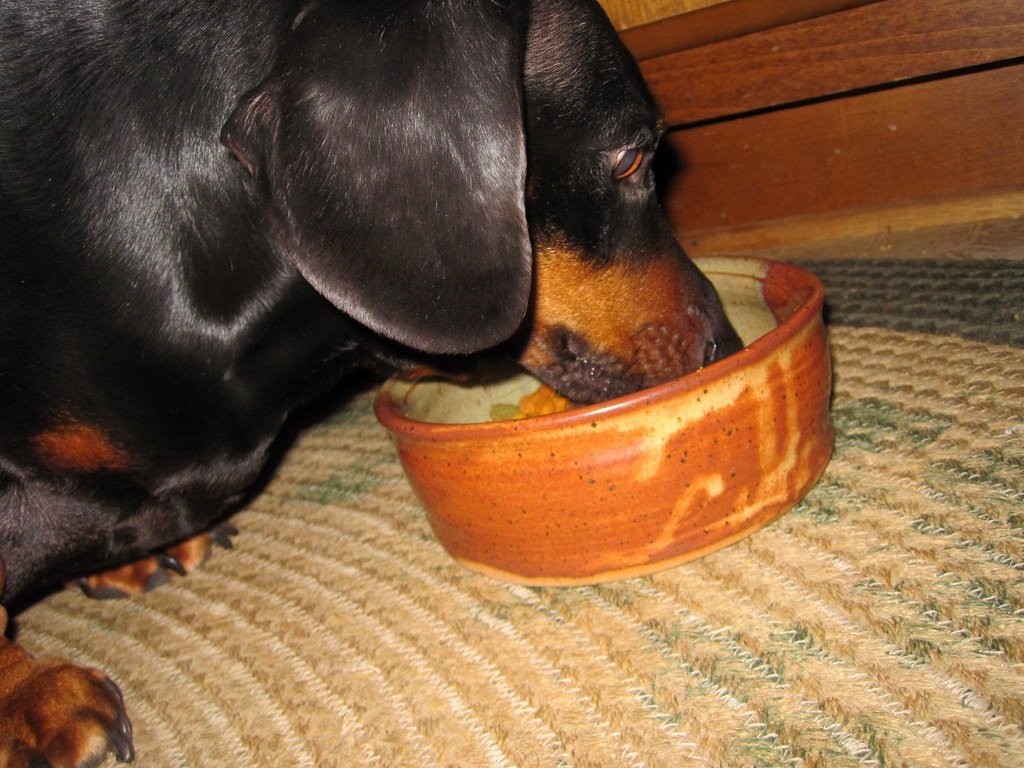
My puppy finishes their bowl instantly and seems to want more. Should I give them extra?
Finishing quickly is common in puppies and is not on its own a sign that the amount is wrong. If you are unsure whether your puppy’s amount is appropriate, that question belongs to your vet rather than to a decision made in the moment.
Do I need to change the amount when I switch to a new food?
Yes, because different foods carry different amounts of energy in the same volume, so an amount that worked for one bag will not automatically apply to another. Use the new food’s own feeding chart as your starting point, and confirm it with your vet.